Abstract
This paper investigates dichotomy systems in Socionics through group actions and vector space representations. Each dichotomy system consists of a fixed set of wall dichotomies whose interactions generate orbital dichotomies through a Socion 2-cocycle. The set of intertype relations form a nonabelian group acting on types, while dichotomy systems induce abelian relation groups acting on both types and their derived models.
1. Introduction
Classical intertype relations in Socionics form a nonabelian group whose structure resists direct representation in terms of type dichotomies. While many dichotomy systems exist, it remains unclear why only certain systems align coherently with a subset of intertype relations, or why others fail to do so.
In particular, there is no faithful, regular action of the intertype relation group compatible with all dichotomy systems. This mismatch obscures the roles of invariants, leads to ad hoc constructions, and makes it difficult to compare systems such as Reinin, Tencer-Minaev, and their alternatives within a unified framework.
This paper resolves the obstruction by replacing direct group actions with induced abelian representations derived from dichotomy systems. By isolating orbital invariants via a 2-cocycle structure and encoding residual variance through selector dichotomies, intertype relations become representable as affine actions on a vector space over .
We classify all dichotomy systems preserving orbital structure, characterise their invariant subgroups, and show how selector dichotomies resolve coset ambiguity without generating new relations. This yields a unified representation-theoretic account of classical intertype relations and explains the special status of Reinin, Tencer-Minaev, and all other systems of dichotomies, which respect all orbital dichotomies.
This paper proceeds as follows. Section 2 introduces the foundational combinatorial objects. Section 3 introduces the functor that outputs the dichotomies classical intertype relationships respect once one inputs a subgroup of them as inputs (Tencer 2011). Section 4 develops the group-theoretic framework. Section 5 introduces set models derived from the vector space associated with the dichotomy systems. Section 6 introduces the selector dichotomies. Section 7 defines the representation map that maps intertype relations to vectors.
1.1. Reader’s Map
This paper may be read along multiple paths, depending on the reader’s background and goals.
1.1.1. For Intuition-First Readers
- Read Sections 1 2 4 6
- Skip formal cohomology language on first pass
- Treat the “centriole” as the primary mental model
- The Appendices may be consulted selectively
1.1.2. For Structure-First Readers
- Read Sections 2 3 4 7
- Treat dichotomies as generators in
- Ignore type semantics until Section 6
1.1.3. For Implementation-Oriented Readers
- Read Sections 2 5 6 Appendices
- Focus on equivariant bijections
- Use selector tables as lookup rules
1.1.4. Minimal Path
- Sections 1 4 6 7
2. Foundational Objects and Notation
denotes a dichotomy with trait set .
denotes a dichotomy algebra or “wall space” generated by a set of 8 wall dichotomies. When combined with the 7 orbital dichotomies, form a dichotomy system, with being the set of all traits that are generated by a set of dichotomies .
denotes the set of orbital dichotomies generated by closure of the 2-cocycle interaction of wall dichotomies expressed in a dichotomy space .
denotes the set of all identified, orbital-respecting dichotomy systems (Newman 2023). (1)
denotes the global collection of all wall (non-orbital) dichotomies that appear in the 16 dichotomy systems.
(1) Footnote. This is sometimes referred to as the “Varlawend” spaces.
2.1. Important Groups
: This is the group that comprises all classical Intertype Relations (ITRs). The structure of this group is isomorphic to (the direct product of the dihedral group of order 8 and the cyclic group of order 2), which is nonabelian. This is also referred to as the “Socion” group. This is alternatively denoted , where is the dihedral group that describes the symmetries of a square (including both rotations and reflections), and is the group of integers under addition, modulo 2 (Tencer 2011). Throughout this paper, denotes the dihedral group of order 8 (the symmetry group of a square). Some authors use ; we do not use this convention here.
: This already has been defined. Its group structure is (elementary abelian group of order 16), isomorphic to . Rigorously, an object is a dichotomy system (, , ) where is a dichotomy system, is any valid type of the Socion, and is an -action (or representation).
: the vector space canonically associated with a dichotomy system , whose elements encode parity assignments of . Elements of act on types of information metabolism (TIMs). Under this identification, each basis dichotomy corresponds to a basis coordinate of , while vectors in represent compositions of dichotomy flips. The group operation is XOR, with the zero vector corresponding to the identity action.
Axiom (Orbital Completeness). Every dichotomy system contains the full set of orbital dichotomies . These dichotomies are invariant across all systems and arise from the Socion 2-cocycle structure. The variation between systems occurs exclusively in their wall dichotomy subspaces . (2)
(2) Footnote. A general dichotomy system is said to lie outside if it fails to preserve the full orbital subspace. Such systems may exhibit system-relative invariances, but do not admit the selector structure or induced representations developed here. Systems such as the Keirsey-Berens dichotomies, while structurally interesting, do not preserve the universal orbital core and therefore fall outside of .
Clarifying remark. Although no explicit cocycle is constructed, the pairing of relations into superego-orbits and the resulting affine ambiguity correspond to a nontrivial class in . Throughout, ‘2-cocycle’ is used in the structural sense: to denote a nontrivial obstruction class responsible for superego-pairing and affine ambiguity, not an explicitly constructed cocycle.
Remark. Classical intertype relations form a nonabelian group that does not admit a faithful, regular action compatible with all dichotomy systems. This obstruction motivates the passage to induced abelian representations and the use of cohomological methods, which isolate dichotomy-relevant degrees of freedom while preserving the universal orbital invariants.
2.1.1. Elements of
identity, or identical
dual
activator
mirror
superego
conflict
quasi-identical
extinguishment, or contrary
supervisor
benefactor
kindred
semidual, or half-dual
supervisee
beneficiary
business, or lookalike
mirage, or illusory
2.1.2. Subgroups of
The subgroups of are as follows, discounting the trivial subgroup and the whole group itself (isomorphic to ), since by Lagrange’s Theorem, subgroup orders must divide . In most cases, sets are expressed using commas and braces, but when no ambiguity results, they will be removed (Tencer 2011). (3)
(3) Footnote. For the list of subgroups for all small groups, check out: https://https://en.wikipedia.org/wiki/List_of_small_groups.
Subgroups of order 2:
Subgroups of order 4:
Subgroups of order 8:
Lemma (Orbital Dichotomies). The orbital dichotomies correspond bijectively to the index-2 subgroups of . Each subgroup defines a canonical quotient homomorphism , yielding a global, system-invariant dichotomy. In the present setting, there are exactly seven such subgroups, hence seven orbital dichotomies (Tencer 2011).
2.1.3. Cayley Table of
We adopt the convention , where the index-2 subgroup is the subgroup of ITRs that preserves the trait of Extroversion/Introversion, and the nontrivial coset corresponds to the flipping of this trait.
Table 1: Cayley Table of
2.1.4. Cayley Diagram of
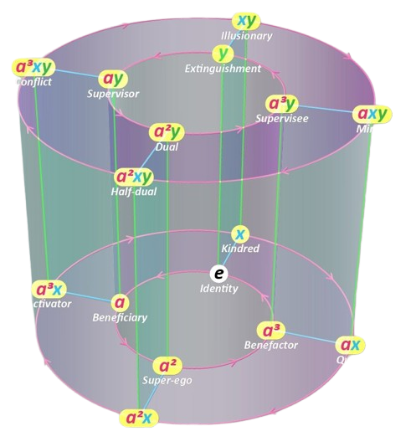
Figure 1: Cayley Diagram of (Andrew Joynton)
3. The Functor
The construction associates to each subgroup of the set of dichotomies it respects. This association reverses inclusion: larger subgroups preserve fewer dichotomies, so if , then , hence the structure is contravariant. In this sense, dichotomy systems are constrained functorially by subgroup structure (Tencer 2011).
will generate only the 7 orbital dichotomies. Alternatively, any index-2 subgroup of other than Democratic/Aristocratic or Irrational/Rational will also generate same set of orbital dichotomies since generates them. generates the Reinin dichotomies (). generates the Tencer-Minaev dichotomies () (Tencer 2011).
Now, any normal subgroup of order 4 (with the exception of the asymmetric ring groups such as the rings of benefit or supervision) will generate 2 orbital-respecting dichotomy systems, with another set of dichotomies produced by the XOR addition between wall dichotomies of these different spaces, which are often referred to as the “waffle” dichotomies (2025). yields the Reinin dichotomies, the Tencer-Minaev dichotomies, and the X-waffles (Shaneri 2022). yields the Reinin dichotomies, Mirror Conflict HEF dichotomies and the -waffles. yields the Tencer-Minaev dichotomies, Business Kindred HEF dichotomies, and the A-waffles. yields the Tencer-Minaev dichotomies, Semidual Mirage HEF dichotomies, and the B-waffles. yields the Reinin dichotomies, Quasi Identity Activation HEF dichotomies, and the -waffles. Finally, generates all orbital-respecting dichotomy systems (all 16 “Varlawend” spaces), and the 15 waffle spaces, since the superego relationship respects all of these dichotomies. In all such cases, only the orbital dichotomies arise directly from subgroup invariance; the waffle dichotomies are derived via XOR combinations across systems. Thus, should be understood as constraining admissible dichotomy systems rather than constructing them ex nihilo.
4. The Homomorphism
The action of the vector space of relations on the Socion group is given by a homomorphism
In the context of the Socionic structure, we regard as the vector space and as the group of intertype relations . Hence, in this interpretative framework, the same homomorphism is expressed as
representing how the vector space of relations acts on the classical group of intertype relations.
4.1. Fixed Point Subgroup
The group of fixed points under the action of the vector space on the classical group of ITRs is given by . For any group action , the 0th cohomology is the fixed subgroup . More rigorously, this is defined as the following:
The cosets of that are not in the subgroup itself:
4.1.1. Universal Invariant Core
The universal invariant core of preserved by all is defined as:
The superego dyad is fixed by all homomorphisms between the Socion group and the vector space. It is the part of invariant under every vector action, such that:
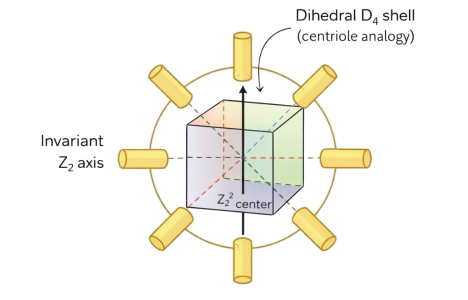
Figure 2: Centriole Diagram (Bruce Quesada) (4)
(4) Footnote. Intuitively, the invariant subgroup may be viewed as a ‘centriole’ around which relational variance is organised.
5. -Set Models
A set model is a pair () consisting of a set together with a left action of a group . In the present framework, an -set model is any set model that carries an action of the group, which is the vector space representation associated with a given dichotomy system. For each dichotomy system , the induced relation group acts on a corresponding set model.
Formally, an -set model is a pair
where is the underlying set and is the group action.
Since there are 16 orbital-respecting dichotomy systems , there are correspondingly up to 16 possible orbital-respecting -set models (), each associated to its induced relation group . (5)
(5) Footnote. For each orbital-respecting dichotomy system , the associated vector space of relations acts regularly on a 16-element set (the set of all functions). In GAP’s transitive group classification, this action corresponds to , the regular permutation representation of . For the list of all transitive permutation groups (along with their corresponding GAP labels) up to order 31, check out: https://people.maths.bris.ac.uk/~matyd/GroupNames/T31.html
Examples of such -set models include Model L (Lowry and White 2018) and Model W (2025), which instantiate different -actions on their underlying functional layouts.
Functions are the positions in a functional schema; monadic (signed) elements are the informational atoms that occupy these positions. For a dichotomy system , let denote the set of functions for an model and the set of monadic elements. The functional configuration space is , with the induced relation group acting through . A functional layout for a type is an element . A bijection is equivariant if
When this holds, the type-level transformations and the functional-layout transformations are isomorphic; applying a relation has the same effect as applying it to the layout itself. The action of on types is abstract, since types are equivalence classes of trait configurations, whereas its action on set models is concrete, since it directly permutes positions or values in .
For example, in Model L, applying the operator to the type ILE permutes the elements in the subgroup
together with all of its cosets in the -space, meaning that the new identity becomes and all of the intertype relations transform accordingly by left multiplication with .
Under the equivariant bijection , this corresponds exactly to the same permutation acting on the ILE’s functional layout: the functions occupying positions inside that subgroup (and their associated cosets) are swapped in the set model by the action . Thus,
implement the same transformation in two different representations of the same underlying structure.
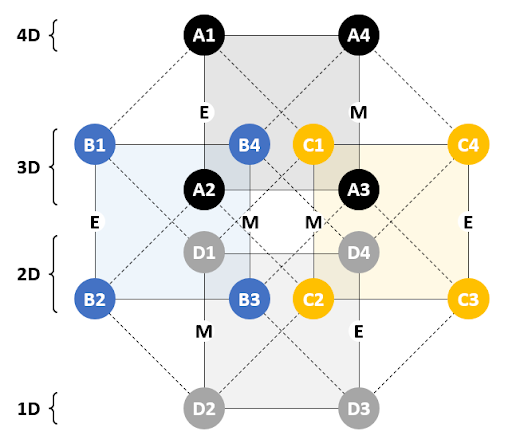
Figure 3: Cayley Diagram of Model L (Andrew Joynton)
6. The Selector
The number of total cosets of is given by . The number of selector dichotomies for whenever the vector space of relations acts on the Socion group is always equal to . What a selector dichotomy assigns, to each coset in , is two possible outputs in the representation space. For a given type , the selector determines which of these two vectors is chosen, based on whether the corresponding boolean trait of the dichotomy holds for . Thus, a selector dichotomy is the rule that splits each non-invariant coset into type-dependent vector assignments.
6.1. Formal Definition
Let:
- be an orbital-respecting dichotomy system,
- be the set of cosets of the invariant subgroup,
- , be the set of selector dichotomies of the dichotomy system ,
- be a selector dichotomy,
- , the selector function.
A selector acts on a coset through its pair of assigned vectors:
where is the chosen vector when , where is the vector chosen when , and where is the representation space associated with the dichotomy system .
Thus, for any type :
In our framing, every type can be defined by a 4-bit coordinate when fixing a dichotomy system, so that:
where is the trait value of on the -th dichotomy.
We fix as the zero vector, so that:
then for any other type the selector bit vector is defined by
Selector admissibility axiom. A dichotomy is a valid selector for the vector space iff the induced selector function is constant on . Consequently, all selector dichotomies are either orbital or bilinear (waffle) dichotomies.
Superego-pairing constraint. For any selector dichotomy and any non-invariant coset , the two vectors assigned to differ by the action of the superego generator. Consequently, selector dichotomies may only permute relations within superego-paired elements of a coset, and may alter wall coordinates but never orbital ones. In particular, if a relation maps to a vector for , then its superego counterpart maps to the corresponding vector obtained by flipping the wall dichotomies , and vice versa, such that and , .
Clarifying remark. Under the selector admissibility axiom, selector dichotomies act only on the vector coordinates associated with the wall (non-orbital) dichotomies, while all orbital dichotomies are preserved. In particular, a selector resolves ambiguity among affine representatives by choosing between wall-dependent components of a coset, without altering the orbital structure fixed by the universal invariant core.
Interpretation. Selector dichotomies do not generate new relations. Rather, they choose among affine representatives of a fixed coset in , resolving ambiguity introduced by variance.
Remark. Selector dichotomies are constrained by the universal invariant core underlying all dichotomy systems. This core preserves the full orbital structure through the Socion 2-cocycle, and any invariant subgroup induced within a given vector space representation is therefore purely orbital. Selector dichotomies may be defined by orbital dichotomies or by derived waffle dichotomies, which arise from XOR combinations of wall dichotomies across different systems. However, selector dichotomies act only by permuting affine representatives within cosets and never alter orbital coordinates in the representation space.
Orbital invariance lemma. For any selector dichotomy , any coset , and any , the vectors assigned by satisfy .
6.2. The Intersection
Let each selector dichotomy induce a partition:
Then, the common refinement of these partitions is:
Equivalently, the refinement is the quotient of by the kernel of the selector signature map,
Therefore,
and each equivalence class corresponds to a unique selector signature, yielding a -chotomy within the vector space . (6)
(6) Footnote. The selector signature map does not embed types into a vector space. Rather, it records discrete selector outcomes across non-invariant cosets. The representation space remains the sole algebraic action space.
7. The Representation Map
For each dichotomy system , we fix a representation map
which assigns to each intertype relation a 4-bit vector in the vector space . The map should be read as an affine (selector dependent) representation. Equivalently, one may write where:
- = baseline vector, and;
- = 1-cocycle for the action on .
References
- Newman, M. (2023). “There are 16 Distinct Systems of 16-Element Type Dichotomies in Socionics”. Date accessed: 11/11/2025.
- Tencer, I. (2011). “The Mathematics of Socionics”. Scribd. Date accessed: 29/12/2025.
Further Reading
Appendices
A. IP Result Compass HEF ()
A.1. Generators Used: (E, D, L, P)
(Superego)
( Superego)
For Types
For Types
For Types
For Types
For Types
For Types
For Types
For Types
For Types
For Types
For Types
For Types
For Types
For Types
B. Semidual Mirage HEF ()
B.1. Generators Used: (E, L, S, P)
(Temperament)
( Displacement)
Irrational/Rational
For Irrational Types
For Rational Types
Positivist/Negativist
For Positivist Types
For Negativist Types
Asking/Declaring
For Asking Types
For Declaring Types
C. Kindred Business HEF ()
C.1. Generators Used: (E, I, S, P)
(Displacement)
( Temperament)
Extroversion/Introversion
For Extroverted Types
For Introverted Types
Irrational/Rational
For Irrational Types
For Rational Types
Static/Dynamic
For Static Types
For Dynamic Types
D. EP Result Compass Process HEF ()
D.1. Generators Used: (E, C, I, P)
(Superego)
( Superego)
For Types
For Types
For Types
For Types
For Types
For Types
For Types
For Types
For Types
For Types
For Types
For Types
For Types
For Types
E. Parallel Club Quadra Charged Rationality ()
E.1. Generators Used: (E, A, C, P)
(Superego)
( Superego)
Extroverted/Introverted
For Extroverted Types
For Introverted Types
Irrational/Rational
For Irrational Types
For Rational Types
Static/Dynamic
For Static Types
For Dynamic Types
Democratic/Aristocratic
For Democratic Types
For Aristocratic Types
Positivist/Negativist
For Positivist Types
For Negativist Types
Process/Result
For Process Types
For Result Types
Asking/Declaring
For Asking Types
For Declaring Types
F. IJ Process Compass Result HEF ()
F.1. Generators Used: (E, A, I, P)
(Superego)
( Superego)
For Types
For Types
For Types
For Types
For Types
For Types
For Types
For Types
For Types
For Types
For Types
For Types
For Types
For Types
G. EJ Compass Result HEF ()
G.1. Generators Used: (E, L, A, P)
(Superego)
( Superego)
For Types
For Types
For Types
For Types
For Types
For Types
For Types
For Types
For Types
For Types
For Types
For Types
For Types
For Types
H. Perpendicular Club Quadra Vertedness ()
H.1. Generators Used: (E, L, I, P)
(Superego)
( Superego)
Extroverted/Introverted
For Extroverted Types
For Introverted Types
Irrational/Rational
For Irrational Types
For Rational Types
Static/Dynamic
For Static Types
For Dynamic Types
Democratic/Aristocratic
For Democratic Types
For Aristocratic Types
Positivist/Negativist
For Positivist Types
For Negativist Types
Process/Result
For Process Types
For Result Types
Asking/Declaring
For Asking Types
For Declaring Types
I. Activation Quasi-Identity HEF ()
I.1. Generators Used: (E, S, I, P)
(Challenge Response Groups)
( Positivity Groups)
Extroverted/Introverted
For Extroverted Types
For Introverted Types
Democratic/Aristocratic
For Democratic Types
For Aristocratic Types
Positivist/Negativist
For Positivist Types
For Negativist Types
J. IJ Result Compass Process HEF ()
J.1. Generators Used: (E, D, A, P)
(Superego)
( Superego)
For Types
For Types
For Types
For Types
For Types
For Types
For +A5 Types
For Types
For Types
For Types
For Types
For Types
For Types
For Types
K. EJ Result Compass Process HEF ()
K.1. Generators Used: (E, D, A, P)
(Superego)
( Superego)
For Types
For Types
For Types
For Types
For Types
For Types
For Types
For Types
For Types
For Types
For Types
For Types
For Types
For Types
L. Mirror Conflict HEF ()
L.1. Generators Used: (E, I, S, P)
(Positivity Groups)
( Challenge Response Groups)
Static/Dynamic
For Static Types
For Dynamic Types
Democratic/Aristocratic
For Democratic Types
For Aristocratic Types
Asking/Declaring
For Asking Types
For Declaring Types
M. IP Process Compass Result HEF ()
M.1. Generators Used: (E, S, I, P)
(Superego)
( Superego)
For Types
For Types
For Types
For Types
For Types
For Types
For Types
For Types
For Types
For Types
For Types
For Types
For Types
For Types
N. Tencer-Minaev ()
N.1. Generators Used: (Q, A, I, D)
(Irrational/Rational)
( Democratic/Aristocratic)
For Democratic Types
For Aristocratic Types
O. Reinin ()
O.1. Generators Used: (E, N, T, P)
(Democratic/Aristocratic)
( Irrational/Rational)
For Irrational Types
For Rational Types
P. EP Process Compass Result HEF ()
P.1. Generators Used: (E, S, I, P)
(Superego)
( Superego)
For Types
For Types
For Types
For Types
For Types
For Types
For Types
For Types
For Types
For Types
For Types
For Types
For Types
For Types